Skip to content
Caring for a loved one with dementia can feel overwhelming, especially if money is tight. You might wonder where to turn for dementia help. Good news—many free or low-cost options exist.
You can find support through community groups, government programs, and nonprofits. No matter your income, you deserve help and hope. Let’s explore practical ways you can get the support you need.
Key Takeaways
- Support groups give emotional help and useful tips. They help caregivers feel less lonely. They also help caregivers learn new skills.
- Adult day centers give safe care for loved ones. Caregivers get time to rest. Many centers help low-income families pay for care.
- Community clinics give cheap medical help and support for caregivers. They help with finding out about dementia and making care plans.
- Medicaid pays for many dementia care services. Check if you can get help. Apply for money help to lower care costs.
- Nonprofit groups like the Alzheimer’s Association give resources and support groups. They also have 24-hour helplines for quick help.
- Respite care lets caregivers take breaks. This lowers stress and stops burnout. Find local programs that give this help.
- Making a support network is very important. Talk to friends, family, and local groups. Share your stories and get advice.
- Learn about resources and ways to speak up for help. Knowing more helps caregivers get better care for loved ones.
Community Dementia Help Resources
Getting dementia help in your area can really help. You do not have to do this by yourself. Many programs in your town or across the country can help families. They offer support, learning, and care. Here are some ways to begin.
Support Groups
Local Groups
Support groups are safe places to share your feelings. You can find them at community centers, churches, or hospitals. Groups like CaringKind and the Alzheimer’s Disease Community Assistance Program also help. Some groups meet in person. Others meet by phone or online if you cannot go out.
Ask your Area Agency on Aging or health clinic for a list of support groups near you.
Peer Support Benefits
Support groups let you meet people who understand you. You can share your stories and get advice. This helps you feel less alone. Studies show support groups can help you in these ways:
| Outcome | Effect Size (p-value) | What This Means for You |
|---|---|---|
| Caregiver abilities | < 0.001 | You learn new skills and feel more able. |
| Subjective well-being | < 0.01 | You feel better emotionally. |
| Caregiver burden | < 0.01 | You feel less stressed and overwhelmed. |
You may also find classes like “Powerful Tools for Caregivers.” Some programs offer one-on-one help. These teach you how to handle stress and care for your loved one.
Adult Day Centers
Low-Cost and Subsidized Care
Adult day centers are safe places for your loved one. Staff give meals, fun things to do, and watch over them. This gives you time to rest or work.
In 2024, the average cost is about $98 each day, or $2,120 each month. Some centers cost as little as $25 a day. Others may cost more. Many centers let you pay less if you have a low income. Medicaid can help pay if you qualify. Veterans may get help from the Department of Veterans Affairs.
- Most states give financial help or lower fees for low-income families.
- Medicaid often pays for adult day care if you qualify.
- Some centers give scholarships or grants.
Enrollment Steps
- Call your local adult day center and ask about programs for people with dementia.
- Ask about costs, financial help, and sliding scale fees.
- Find out what papers you need to apply for help.
- If you have Medicaid or VA benefits, tell the center. They can help you use these programs.
- Visit the center if you can to see if it is a good fit.
Some centers have waiting lists, so start early.
Community Clinics
Affordable Medical Services
Community clinics give medical care for little or no money. Many clinics have doctors, nurses, and social workers who know about dementia. They can help with diagnosis, medicine, and care plans. Some clinics also have programs and classes for caregivers.
| Resource Type | Description |
|---|---|
| Support Groups | Meet other caregivers and share your stories. |
| Caregiver Support Programs | Take classes and get tips on caring for someone. |
| Educational Resources | Learn about dementia and support you can get. |
You can find clinics through your health department, Area Agency on Aging, or groups like CaringKind.
Accessing Care
- Call the clinic and ask if they have dementia help or caregiver support.
- Bring proof of income if you want lower fees.
- Ask about walk-in hours or if you need an appointment.
- Ask about any classes or support groups they have.
Many clinics have social workers who can help you find more help in your area.
Getting dementia help does not have to cost a lot. Support groups, adult day centers, and clinics can give you help and relief. Start by reaching out to one today. You are not alone.
Government Assistance for Dementia Care
Government programs can really help when you care for someone with dementia. These programs can help pay for care and find services. They also give you a break when you need it. Here are the main choices and how to begin.
Medicaid and Financial Aid
Medicaid helps people with low income get health care and long-term support. You can use Medicaid for home care, adult day centers, nursing homes, and some medical supplies. Many families use Medicaid for dementia help.
Eligibility
You must meet income and asset limits to get Medicaid. These limits are different in each state. Here are some examples:
| Category | Income Limit (2023) | Asset Limit |
|---|---|---|
| Single Individual | $2,742 | $2,000 |
| Married Couple (both applying) | $5,484 | $3,000 |
Some states let you have more assets. For example:
- In Missouri, a single person can have up to $6,068.80 in assets.
- Married couples can have up to $12,137.55 together.
- If only one spouse applies, the applicant can have $6,068.80. The other spouse can keep $157,920.
Call your Medicaid office or Area Agency on Aging. Ask about your state’s rules and get help with your application.
Covered Services
Medicaid pays for many kinds of dementia care. You can get help with:
- Home health aides
- Adult day care
- Nursing home care
- Medical equipment
- Prescription drugs
Medicaid gives more help to people with dementia than to others. Here is what Medicaid pays on average each year:
| Description | Amount |
|---|---|
| Average annual Medicaid payment per person for individuals with dementia | $8,565 |
| Average annual Medicaid payment for individuals without dementia | $365 |
| Medicaid spending difference for individuals with dementia (compared to those without) | $7,700 – $9,829 |
Medicaid covers much more for dementia care. This can really help your family.
Medicare Benefits
Medicare is another program for older adults and some people with disabilities. You can use Medicare with Medicaid.
Dementia Coverage
Medicare pays for doctor visits, hospital stays, and some home health care. It does not pay for long-term nursing home care. But it does help with medical needs for dementia. You can use Medicare for:
- Doctor visits
- Hospital care
- Short-term skilled nursing
- Hospice care
- Some home health services
Note: You still pay deductibles and copays. If you have both Medicare and Medicaid, Medicaid may help pay these costs.
Application Process
You can sign up for Medicare online, by phone, or at a Social Security office. Here is how to start:
- Check if you or your loved one is 65 or older, or has a disability.
- Gather Social Security numbers, birth certificates, and proof of income.
- Visit the Medicare website or call 1-800-MEDICARE.
- Fill out the application and ask for help if you need it.
If you already get Social Security, you may be signed up for Medicare automatically.
State and City Programs
Many states and cities have extra help for dementia care. These programs give you more choices and money help.
NYC Aging Services
If you live in New York City, you can use NYC Aging Services. They offer:
- Case management
- Home-delivered meals
- Respite care
- Help with transportation
Call 311 or visit the NYC Aging website to learn more. These services help you care for your loved one and yourself.
Special Needs Assisted Living Vouchers
Some states and cities give vouchers for assisted living. These vouchers help pay for housing and care in special needs places. You can use them if your loved one needs more help than you can give at home.
How to apply:
- Contact your Department of Social Services or Area Agency on Aging.
- Ask about voucher programs for dementia care.
- Fill out the application and give proof of income and medical need.
Voucher programs may have waiting lists. Apply early and check back often.
You can get dementia help from Medicaid, Medicare, and local programs. Start by checking if you qualify and gather your papers. Reach out to local agencies and ask questions. You have choices, and you can get the help your family needs.
Nonprofit and Charitable Dementia Help
Nonprofit groups can give you lots of support. They offer free or cheap services for dementia help. You do not have to go through this alone. Here are ways you can use these resources.
National Organizations
Alzheimer’s Association
The Alzheimer’s Association is a top group for dementia support. You can join their programs or go to workshops. They share information about care.
You can connect with local chapters for events and support groups. They have resources in English and other languages.
Other national nonprofits help families too:
- Alzheimer’s Foundation of America: Gives education, support, and a helpline.
- CaringKind: Offers services for caregivers and people with dementia.
- Dementia Action Alliance: Works on advocacy and education for families and caregivers.
Visit their websites or call their hotlines to get help.
24-Hour Helplines
Sometimes you need help right away. Many national groups have 24-hour helplines. You can call any time, day or night. Someone who knows about dementia will answer. They can give advice and help you find local services.
Save the helpline number in your phone. You might need quick advice or someone to talk to.
Local Charities
Community Support
Local charities in your area can give hands-on help. They may deliver meals, fix homes, or support caregivers. Here are some examples:
| Organization Name | Description |
|---|---|
| Del Oro Caregiver Resource Center | Helps families caring for people with brain impairment in Northern California. |
| Meals on Wheels by ACC | Brings meals to older adults who cannot cook in Sacramento County. |
| Rebuilding Together Sacramento | Fixes homes for low-income owners, including older adults. |
| California Caregiver Resource Center | Supports family caregivers of adults with chronic health problems, including dementia. |
Call these groups or check their websites to learn more.
Faith-Based Services
Many churches, synagogues, and mosques help families. You might find meal programs or friendly visits. Some offer small grants for urgent needs. Ask your local faith group what help they have.
CaringKind Programs
Counseling and Training
CaringKind gives counseling and training. You can join classes to learn about dementia and caregiving. Their staff can answer questions and help you make a care plan.
Support for Families
CaringKind runs support groups and early-stage programs. You can join social events or talk with others who understand.
| Program Type | Description |
|---|---|
| Education Programs | Learn about Alzheimer’s and caregiving. |
| Helpline and Dementia Consultation | Get information and emotional support. |
| Support Groups | Share your story and get advice from others. |
| Early Stage Services | Join programs for people with early-stage dementia. |
| Social & Community Engagement | Take part in activities that help you connect with others. |
You can reach CaringKind by phone or online. Their team will help you find the right program.
If you feel lost, nonprofit groups want to help you. Just ask for help. They can make your caregiving journey easier.
Affordable Dementia Care Strategies
Home Care Tips
Safe Environment on a Budget
You want your loved one to feel safe at home. You do not need to spend much money. Try these ideas:
- Make a daily routine. This helps your loved one feel less confused.
- Use favorite activities to help with memory. Play music or look at old photos.
- Eat meals at the same time every day. This helps with nutrition.
- Plan hygiene tasks often. Set reminders for bathing and grooming.
- Have a set bedtime. Do calming things before sleep, like reading or listening to music.
Many community services give free or cheap help for families caring for someone with dementia at home. These programs can lower costs by offering respite care, meal delivery, rides, and support groups for caregivers.
Using Respite Services
Respite care gives you time to rest. You can relax, run errands, or recharge. Local Area Agencies on Aging, the Alzheimer’s Association, and nonprofits offer low-cost or free respite care. Here is how respite care helps:
- You get breaks, which lowers stress.
- You can care for your own health and hobbies.
- Respite care gives you relief. You come back to caregiving with more energy.
Caregiver Self-Care
Free Mental Health Support
Taking care of yourself is important. You can find free mental health help from local agencies and nonprofits. Here are some choices:
| Service Type | Description |
|---|---|
| Specialized Information and Referral | Get advice for caregiver stress and community resources. |
| Family Consultation and Care Planning | Staff help you look at needs and care choices. |
| Respite Care | Money help for short-term in-home care and adult day care. |
| Short-Term Counseling | Talk with counselors for emotional support. |
| Support Groups | Meet others to share and lower stress. |
| Professional Training | Learn about long-term care and patient management. |
| Legal and Financial Consultation | Get help with legal papers and planning. |
| Education | Learn about dementia and stress management for caregivers. |
Preventing Burnout
You may feel tired or stressed. Burnout happens when you do too much for a long time. Watch for these causes:
- Physical tiredness
- Money worries
- Not asking for help
- Feeling alone
- Too many emotions and not enough ways to cope
Take breaks, ask for help, and join support groups. You need care, too.
Low-Cost Safety Modifications
DIY Solutions
You can make your home safer with easy changes. Try these tips:
- Put grab bars and rails in bathrooms and halls.
- Add more lights so you can see better.
- Use traction strips in places that get slippery.
- Put transfer benches in showers or tubs.
These changes help stop falls and injuries.
Grants and Donations
You can get help to pay for safety changes. Look for these programs:
| Assistance Program | Description |
|---|---|
| Rebuilding Together | Money and volunteers for home changes. |
| Medicaid HCBS Waivers | Help for home changes so seniors can stay home. |
| Veterans Programs | Grants for home changes for veterans from the VA and nonprofits. |
Ask your Area Agency on Aging or social worker about grants and donations. You can get dementia help without spending much money.
Accessing Dementia Help
Getting the right dementia help starts with knowing what you need. You also need to know how to qualify. The forms and steps can seem confusing. But you can get through it. Here are ways to begin and avoid problems.
Eligibility and Documentation
Income and Asset Limits
Most programs look at your income and assets before helping. Each state has its own rules. You may need to show pay stubs or bank statements.
Tax returns might be needed too. If you live with others, some programs count everyone’s income. Always ask what counts and what does not. If you are not sure, call your Area Agency on Aging. They can explain the rules for your state.
Required Paperwork
You need to collect some papers before you apply. These usually include:
- Proof of income, like pay stubs or Social Security papers
- Bank account details
- ID cards, such as a driver’s license or state ID
- Proof of address, like a utility bill or lease
- Medical records that show a dementia diagnosis
Keep all your papers in one folder. This helps when you fill out forms or talk to agencies.
Application Steps
Where to Start
Start by calling your Area Agency on Aging or a community clinic. Ask what programs you can use. Many places have staff who will help you step by step. You can also check government websites. Or talk to a social worker at your loved one’s doctor’s office.
Common Mistakes
Some people have trouble because they miss a step or a deadline. Here are mistakes to avoid:
- Not doing enough research
- Leaving out information on forms
- Missing important deadlines
- Not asking for help when you need it
If you get stuck, ask for help. Agency staff want you to do well.
Finding Local Contacts
Area Agencies on Aging
Area Agencies on Aging are a good place to start. They help older adults and caregivers find services. You do not need to meet money rules to get information. They can connect you to meal programs and caregiver support.
Social Workers
Social workers know how the system works. You can find them at hospitals, clinics, or local nonprofits. They help you fill out forms and gather papers. They also help you understand your choices.
Here is a quick look at some services you can contact:
| Service Type | Description |
|---|---|
| Title III Services | Gives support for older adults, like nutrition, health, and caregiver help, so they can stay healthy and independent. |
| National Family Caregiver Support Program | Offers respite care, caregiver training, information, and counseling to help family caregivers. |
| Area Agencies on Aging (AAAs) | These groups plan and give services for people over 60. You do not need to meet money rules to get help. |
You can call, email, or visit these agencies. Many have staff who speak different languages.
Taking the first step can feel hard. But you are not alone. With the right papers and support, you can get the dementia help your family needs.
Overcoming Barriers to Dementia Help
Caring for someone with dementia can be hard. You may face problems that make it tough to get help. Things like language, culture, and getting a ride can stop you. Let’s see how you can get past these problems and find support.
Language and Culture
Multilingual Resources
If you do not speak English well, getting dementia help can be confusing. Many families have trouble finding support in their own language.
For example, some people said, “I did not know about support at first, and when I tried, there was nothing in English.” Phone interpreters can be hard to use. This is true if your loved one cannot hear well or has trouble understanding.
Here are some ways to get help in your language:
- Ask your clinic or Area Agency on Aging if they have services in your language.
- Look for groups or nonprofits that help people from your culture.
- See if national groups like the Alzheimer’s Association have materials or hotlines in your language.
- Bring a family member or friend to appointments if you worry about talking.
Keep any papers or websites you find in your language. You can use them to help your family learn about dementia.
Culturally Sensitive Support
Your culture can change how you think about dementia. Some families feel shame or do not want to talk about it. One person said, “There is a lot of taboo about [dementia]… people just did not talk about it.” Some people do not trust doctors or worry their loved one will not be treated right. You may want to stay at every visit to make sure your loved one is respected.
You can:
- Find support groups that know your culture.
- Ask for a doctor who understands your background.
- Talk with your family about dementia to help break the silence.
- Use learning materials that match your beliefs.
Transportation and Access
Free or Discounted Rides
Getting to doctor visits or support groups can be hard if you do not drive or cannot pay for a ride. Many families miss visits because they do not have a way to get there.
Here are some ways to get a ride:
- Use volunteer ride programs for older adults or people with disabilities.
- Ask about Medicaid’s Non-Emergency Medical Transportation if you can get it.
- See if your city has paratransit rides for people with dementia.
- Look for local nonprofits that give free or cheap rides.
Volunteer drivers can help you get in and out of the car. They may wait with you at your visit.
Mobile Services
If you live far from a clinic or in the country, mobile services can help. Telemedicine lets you talk to doctors from home. This saves you time and money. You can get advice, learn about dementia, and even get a diagnosis without leaving your house.
- Ask your clinic if they have video visits or phone calls.
- Use telemedicine for check-ups, care plans, and caregiver classes.
- Join online support groups if you cannot travel.
Mobile services help you get care no matter where you live. You do not have to face these problems alone. With the right steps, you can find dementia help that works for your family.
Next Steps and Encouragement
There are many ways to get more support for dementia care. You can make things easier by learning and building a strong network. Here are some ideas for what to do next.
Building Support Networks
Connecting with Others
You do not have to face this alone. Try reaching out to people who understand your situation. Talk to friends, family, or neighbors. Many caregivers join local groups or visit community centers. These connections can give you advice and comfort. They can also help you with daily tasks.
Here are some good ideas for low-income families:
| Strategy | Source | Impact |
|---|---|---|
| Education Programs | Alzheimer’s Association | 40% fewer challenging behaviors; 50% less caregiver depression |
| Home Modifications | Johns Hopkins Research | 60% less agitation; better daily function |
| Daily Routines | Journal of Gerontological Nursing | 37% drop in behavioral symptoms |
| Communication Techniques | AARP | 45% fewer tough interactions; better relationships |
| Community Resources | National Adult Day Services Association | 60% less caregiver stress; delays nursing home by 1.5 years |
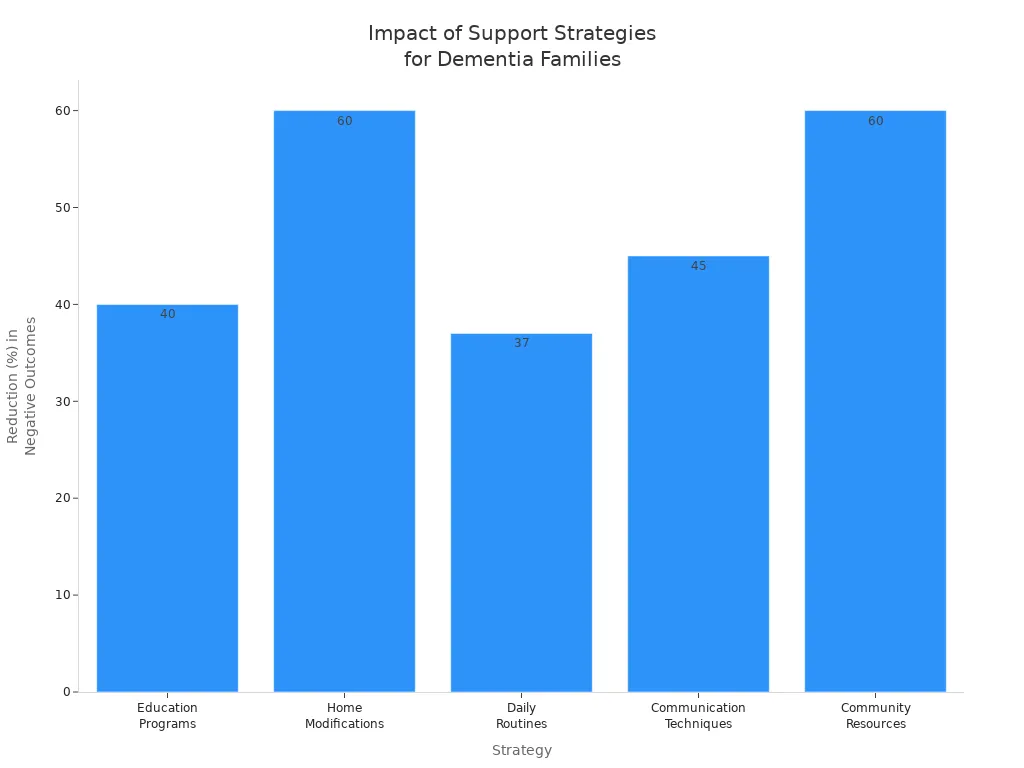
Small steps, like joining a group or learning new skills, can really help.
Online and In-Person Communities
You can find support online or in person. Many groups offer free classes and support meetings. These groups teach you about dementia and caregiving. You can share your story and ask questions. You will get advice from people who understand.
- Free classes online or in person teach about dementia care.
- Support groups help you feel less alone and lower your stress.
- Local groups and Area Agencies on Aging connect you to services as your needs change.
- Sharing your story in a safe group can give you hope and new ideas.
Staying Informed
Caregiver Education
Learning about dementia can help you feel more sure of yourself. Many classes are free or cost very little. You can pick classes or workshops that fit your time.
Here are some helpful programs:
| Program Name | Description |
|---|---|
| The Empowered Caregiver | Learn to manage stress and find support. |
| Dementia Conversations | Practice talking about tough topics. |
| Effective Communication Strategies | Improve how you talk with your loved one. |
| Transitions in Care | Get help with moving to long-term care. |
| Managing Money | Learn about finances and avoiding scams. |
| Understanding and Responding to Dementia-Related Behavior | Find ways to handle challenging behaviors. |
| Living with Alzheimer’s: For Caregivers (Early, Middle, Late Stage) | Get stage-specific advice and support. |
Many of these programs are online or run by local nonprofits.
Advocacy
You can help your loved one and others by speaking up. Advocacy means asking for better care and more resources. You can join meetings, share your story, or help others find support. Every voice is important.
- Join caregiver groups that work for better dementia care.
- Share your story with local leaders or organizations.
- Keep learning about new programs and caregiver rights.
You can build a strong support network and stay informed. Each step brings you closer to the help and hope you need.
You can get dementia help in many ways, even with little money. Community groups, government programs, and nonprofits can support you. Start by asking for information or joining a group nearby. You do not have to do this alone. There are low-cost ways that really help:
| Strategy | Impact |
|---|---|
| Alternative reimbursement models | Caregivers feel less stress and save money |
| Community services integration | People get better care and stay out of nursing homes |
| Workforce development | Helpers learn more skills and give better care |
Every step you take gives your family more support and hope.
FAQ
How do you find free dementia support in your area?
Start by calling your local Area Agency on Aging. Ask about free support groups, clinics, or day centers. You can also check with your doctor or local library for flyers and contact numbers.
What documents do you need to apply for help?
You usually need proof of income, ID, address, and medical records showing a dementia diagnosis. Keep these in a folder. This makes it easier when you fill out forms or talk to agencies.
Can you get paid to care for a family member with dementia?
Sometimes, yes! Medicaid and some state programs pay family caregivers. Ask your local Medicaid office or Area Agency on Aging about caregiver pay programs in your state.
How do you join a dementia support group?
Call your local community center, hospital, or the Alzheimer’s Association. Ask about meeting times and how to join. Many groups meet online or by phone if you cannot travel.
What if you do not speak English well?
Look for clinics or nonprofits with services in your language. Bring a friend or family member to help translate. Many national groups offer hotlines and materials in Spanish, Chinese, and other languages.
How can you get a break from caregiving?
Ask about respite care from your Area Agency on Aging or local nonprofits. Some programs offer free or low-cost breaks. You can use this time to rest, run errands, or take care of yourself.
Where do you get help with home safety changes?
Contact Rebuilding Together or ask your Area Agency on Aging about grants. Some nonprofits and Medicaid programs help pay for grab bars, ramps, or other safety fixes.
What if you feel overwhelmed or alone?
You are not alone. Join a support group, talk to a social worker, or call a helpline. Sharing your feelings can help. Many caregivers feel better after connecting with others.