Skip to content

To find local dementia programs, use trusted online lists. You can also call health groups and talk to community helpers. Start with official sites like alzheimers.gov or your local agencies. Try searching online, but calling can give you faster answers. Keep a notebook with you. Write down questions, names, and numbers as you find them.
Key Takeaways
- Use trusted websites like Alzheimers.gov to find dementia programs near you.
- Call health groups and community helpers to get quick answers about services.
- Keep a notebook to write down important details, questions, and contact names.
- Check where programs are and when they are open before you go.
- Ask your doctor to suggest local dementia programs and support services.
- Join support groups to meet others with the same challenges and learn helpful tips.
- Use Area Agencies on Aging for free help and resources made for dementia care.
- Visit programs yourself to see the place and watch how staff act before you sign up.
Online Directories for Local Dementia Programs
Looking for local dementia programs can seem hard at first. Online directories make it much simpler. You can use trusted websites to find support and services near you. These tools help you connect with programs that match your needs.
Alzheimers.gov and Community Resource Finder
Alzheimers.gov is a government website. It shares information about dementia care, support, and research. You can use it to find local dementia programs. It also helps you learn about services for caregivers and families.
The Community Resource Finder is another good tool. This directory is made by AARP and the Alzheimer’s Association. It gives you many resources, like community programs and medical services. You can search for memory care, support groups, and even legal or financial help.
Search by ZIP Code
Most directories let you search by ZIP code. This helps you find programs close to where you live. For example, the Best Programs for Caregiving directory has a ZIP code search. You type in your ZIP code. The site shows you almost 50 programs for caregivers. Many programs are in-person, by phone, or online. Some offer help in Spanish, Vietnamese, French, and Cantonese.
Tip: Always check the location and hours before you go. Some services need you to make an appointment.
Toll-Free Helpline Access
If you like talking to someone, you can call a toll-free helpline. Alzheimers.gov and the Alzheimer’s Association both have helplines. Friendly staff can answer your questions. They help you find local dementia programs and guide you on what to do next. Sometimes, calling is faster than searching online.
GetCareSC.com and Eldercare Locator
GetCareSC.com is a website for people in South Carolina. It can help you look for similar state resources. This site lists local dementia programs, adult day centers, and caregiver support. You can search by location or by type of service.
The Eldercare Locator is a national tool from the U.S. Administration on Aging. It connects you with services for older adults, including dementia care, in every state.
State and Federal Listings
Both GetCareSC.com and Eldercare Locator have state and federal listings. You can find programs run by government, non-profits, and private groups. These listings tell you about eligibility, costs, and how to apply.
Here’s a quick look at some top directories:
| Name | Purpose | Unique Feature | Access Type |
|---|---|---|---|
| Best Programs for Caregiving | Connects caregivers with support resources | ZIP code look-up, multi-language | Free online |
| Community Resource Finder | Lists community and medical dementia programs | Partnership with AARP & Alzheimer’s | Free online |
| Eldercare Locator | National directory for older adult services | State and federal program listings | Free online/phone |
| GetCareSC.com | South Carolina-specific aging resources | Local service provider search | Free online |
Service Provider Search
You can use these directories to find service providers. For example, Eldercare Locator lets you:
- Start your search with their online tool.
- Check your local health department’s website for more help.
- Connect with in-home support agencies, adult day centers, and memory care places.
Many caregivers say these directories save time and lower stress. Dr. David Bass and Kathleen Kelly both say having all these programs in one place helps families a lot. You can find good, proven programs without searching many websites.
If you care for someone with dementia, these directories can help you find support in your area. You can also use them to compare programs and pick the best one for your family.
Using these online directories is the first step to finding local dementia programs that fit your needs.
Contacting Healthcare Providers
You can get help by talking to healthcare providers. Doctors, nurses, and clinic staff know about local dementia programs. They can help you learn about your choices. This step can save time. It helps you find the right support for your family.
Ask Your Doctor About Local Dementia Programs
Your main doctor is a good place to start. Doctors see many people with memory problems. They often know about programs in your area. You can ask your doctor for advice and referrals.
Referrals to Programs
Bring a list of questions when you see your doctor. This helps you get clear answers. It makes your visit more useful. Here are some questions you might want to ask:
- How familiar are you with diagnosing dementia?
- When would you refer me or my loved one to a specialist?
- What tests will you perform?
- What does each test involve?
- How long will the tests take?
- When will we get the results?
Write down the answers during your visit. You can use this information to compare different local dementia programs later.
Doctors can send you to memory clinics, adult day centers, or support groups. They may also know about programs for caregivers.
In-House Support Services
Some clinics have their own support services. You might find social workers, nurses, or counselors who help families. These people can help you make care plans. They answer questions and connect you with community resources.
Hospital and Clinic Resources
Hospitals and clinics offer many types of dementia support. You can ask about these services when you visit or call.
Social Work Departments
Social workers help families in many ways. They make care plans based on the stage of dementia. They also change plans as needs change. Social workers can send you to adult day care, home care, and other resources.
Here are some common services you might find:
| Type of Service | Description |
|---|---|
| Home Based Primary Care | In-home medical care for veterans with dementia. |
| Homemaker and Home Health Aide | Help with daily tasks and personal care at home. |
| Respite Care | Gives caregivers a break while the patient is cared for. |
| Adult Day Health Care | Day programs with care and social activities. |
| Outpatient Clinic | Medical check-ups and support without staying overnight. |
| Inpatient Hospital | Full medical care for serious dementia problems. |
| Nursing Home | Long-term care for people with advanced dementia. |
| Palliative Care | Special care to ease symptoms and stress from illness. |
| Hospice Care | End-of-life care that focuses on comfort and quality. |
| Caregiver Support | Help and resources for people caring for someone with dementia. |
Memory Clinics
Memory clinics work with local dementia programs. They train doctors and teams to care for people with dementia.
Clinics look at tough cases and help family doctors know when to send patients to specialists. They also share patient histories with specialists to make care better.
| Aspect of Collaboration | Description |
|---|---|
| Training Programs | Clinics teach family doctors and teams to run memory clinics. |
| Capacity Building | Clinics help doctors care for dementia, so fewer need specialists. |
| Patient Management | Clinics look at hard cases and guide doctors, so referrals happen only when needed. |
| Specialist Efficiency | Clinics give patient histories, so specialists work faster and better. |
You can ask your doctor or clinic staff if they work with a memory clinic. This can help you get better care and find the best local dementia programs for your needs.
Community and Support Organizations
Community groups can help you find local dementia programs. They give support and teach new skills. You can meet people who know what you are going through. Let’s look at some groups that help families and caregivers.
Alzheimer’s Association and The Ark of SC
The Alzheimer’s Association has chapters in many places. You can contact your local chapter for help and advice. They also have events you can join. There are 74 chapters in the United States.
You can call their helpline or check their website. You will find meetings and workshops near you.
Helplines and Support Groups
Support groups let you share your story and listen to others. These groups meet in person or online. The Alzheimer’s Association has a helpline.
You can talk to someone who knows about dementia care. You can ask questions or get advice. You can also talk when you need support.
The Ark of SC helps families in South Carolina. They offer many services for people with dementia. Here is what they provide:
| Service Type | Description |
|---|---|
| Adult Respite Care | Half-day care for adults. This gives caregivers a break. |
| Early Memory Loss/Navigation Club | Half-day program for people with early memory loss. |
| Support Groups | Groups for caregivers to share and learn ways to cope. |
| Memory Screenings | Tests to check for memory problems. |
You can join classes like Powerful Tools for Caregivers. You can get one-on-one help and join support groups to learn coping skills.
Family Support Services
Family support services help with daily problems. You can get advice on care plans. You can learn about memory screenings. You can find programs for early memory loss. These services help you feel less alone and more ready.
Alzheimer’s Foundation of America (AFA)
The Alzheimer’s Foundation of America helps people with dementia and their families. You can join free support groups led by social workers. These groups are safe places to talk and ask questions. You can learn from others.
Free Support Groups
AFA has free Alzheimer’s and dementia support groups. Social workers lead these groups. You can meet other caregivers and share your stories. These meetings help you learn new ways to care for your loved one.
Licensed Social Workers
AFA’s social workers have special training in dementia care. They answer your questions and help you find local dementia programs. You can ask for advice or join a group for support.
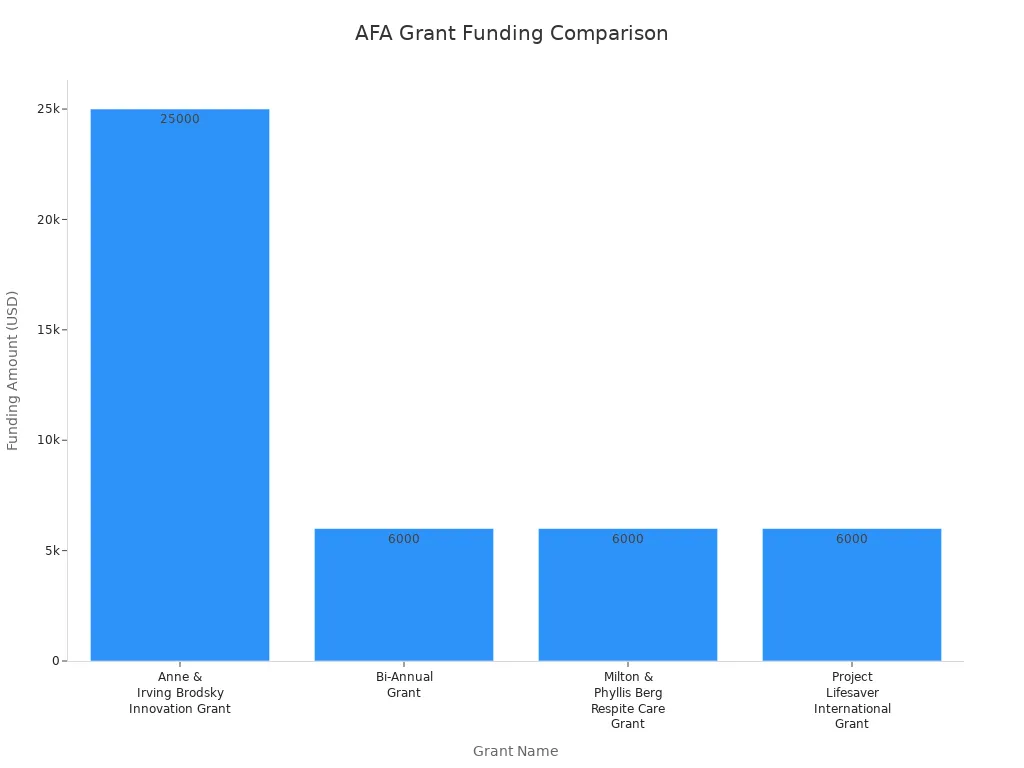
AFA also gives money to programs that help families.
Here are some grants they offer:
| Grant Name | Description | Funding Amount |
|---|---|---|
| Anne & Irving Brodsky Innovation Grant | Money for new programs that help people with Alzheimer’s and their families. | $25,000 |
| Bi-Annual Grant | Supports programs that help AFA’s mission. | $6,000 |
| Milton & Phyllis Berg Respite Care Grant | Gives scholarships for respite care to families who need it. | $6,000 |
| Project Lifesaver International Grant | Pays for programs that stop people with dementia from wandering. | $6,000 |
Try joining a support group or go to an event. You can learn new skills and meet people who know what you are facing.
If you want to join a community program, check the rules first. Some programs need you to meet health or care needs. Here is a table to help you see if you qualify:
| Eligibility Criteria | Description |
|---|---|
| Nursing Facility Level of Care A (NF-A) | Must meet guidelines or above |
| Developmental disability | Must be present |
| Moderate to severe Alzheimer’s disease or other type of dementia | Must be present |
| Mild cognitive impairment | Needs help with two self-care activities |
| Chronic mental illness or brain injury | Needs help with two self-care activities and one of: money management, accessing resources, meal preparation, or transportation |
You can contact these groups, join a support group, or take a class. This helps you find the right local dementia programs and get the support you need.
Area Agencies and Social Services
Getting help for dementia care can be hard. You have choices that make things easier. Area Agencies on Aging (AAAs) and social workers are good resources. They help you pick options and find support.
Area Agency on Aging for Local Dementia Programs
AAAs are in every state. You can find one close to you. These agencies help older people and their families. They give free programs for dementia caregivers. Many programs get money from grants or the government. Most services do not cost anything.
The National Family Caregiver Support Program helps caregivers. AAAs give caregiver training, respite, support groups, and emergency help.
AAAs want you to live with dignity and independence. They organize many services. You can get advice, training, and emergency help.
ZIP Code Locator
You can use a ZIP code tool on the AAA website. Type in your ZIP code. The site shows the closest office. You get contact info and a list of services. This tool saves time and helps you find dementia programs fast.
- AAAs give special services for caregivers and people with dementia.
- They offer help and support for families with dementia care.
- AAAs organize many services to help families find dementia programs.
Program Referrals
AAAs send you to programs that fit your needs. Staff listen to you and your situation. They suggest support groups, respite care, and training classes.
You can ask questions and get clear answers. AAAs have over 600 offices in the country. They started in 1973 with the Older Americans Act.
- There are over 600 AAAs in the United States.
- AAAs began with the Older Americans Act in 1973.
- They help older adults live on their own and with dignity.
Social Workers and Case Managers
Social workers and case managers help you with care. You can find them in hospitals, clinics, and community centers. They know how to help families make hard choices.
Hospital-Based Services
Hospital social workers help you plan care after leaving the hospital. They talk about your choices. They can set up home visits and connect you with community help. You get support for health needs and daily life.
Community Case Management
Case managers work with you at home or in your community. They visit your home and check how you live. They help you make care plans that fit your needs. Case managers also organize medical care and in-home help. They stand up for you and connect you with local help.
| Role of Case Manager | Description |
|---|---|
| Care Coordination | Makes in-home care and well-being better with good case management. |
| Home Visits | Checks living conditions, builds trust, and works with families on care plans. |
| Care Planning Expertise | Makes short- and long-term care plans that can change as needed. |
| Coordinating Medical and In-Home Care | Looks at and organizes care services, helping families with hard systems. |
| Advocacy and Emotional Support | Stands up for good care and connects families with community help. |
Ask your hospital or local AAA if they have a social worker or case manager to help you. You do not have to do everything by yourself.
You can use these agencies and helpers to find the right support for your family. They make finding dementia care easier and less stressful.
Evaluating and Choosing a Program
Picking a dementia program can feel like a big job. You want your loved one to get good care. There are ways to make this choice easier. Let’s look at what you should check and what to ask.
Quality Indicators
When you visit or call a program, look for signs it is good. These signs show if the program cares about people and does things right.
Staff Training
Ask about how staff learn to help people with dementia. Staff who get good training know how to help with mood, memory, and behavior changes. You can ask:
- How often do staff get new training?
- Do staff learn about safety and how to talk to people?
- Are nurses or other experts there?
Safety Measures
Safety is very important. You want your loved one to be safe. Check if the program has locked doors, alarms, and plans for emergencies. Ask these questions:
- How does the program stop people from wandering?
- Are there safety checks during the day?
- What do they do if there is a medical emergency?
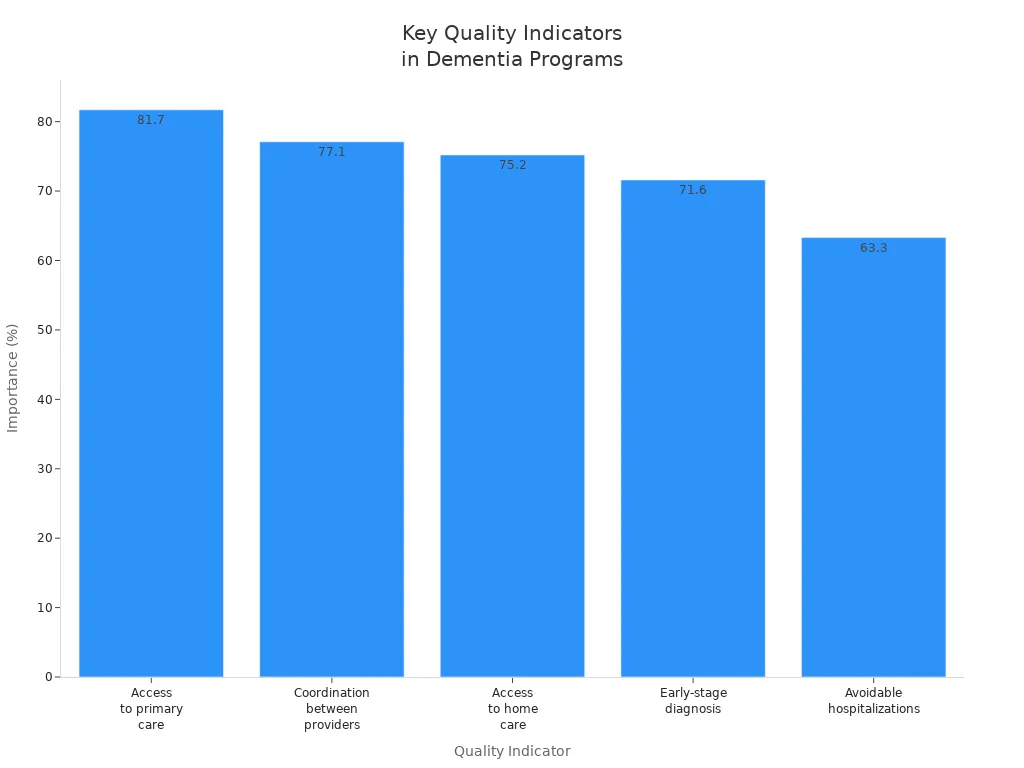
Here is a table that shows what makes a dementia program good:
| Domain of Performance | Quality Indicator |
|---|---|
| Access | Access to a regular primary care provider (81.7%) |
| Coordination | Coordination between health care providers (77.1%) |
| Home Care | Access to home care (75.2%) |
| Early Diagnosis | Early-stage diagnosis (71.6%) |
| Avoidable Hospitalizations | Avoidable hospitalizations (63.3%) |
Enrollment Questions
Before you join a program, ask questions. This helps you know if the program is right for you.
Cost and Payment
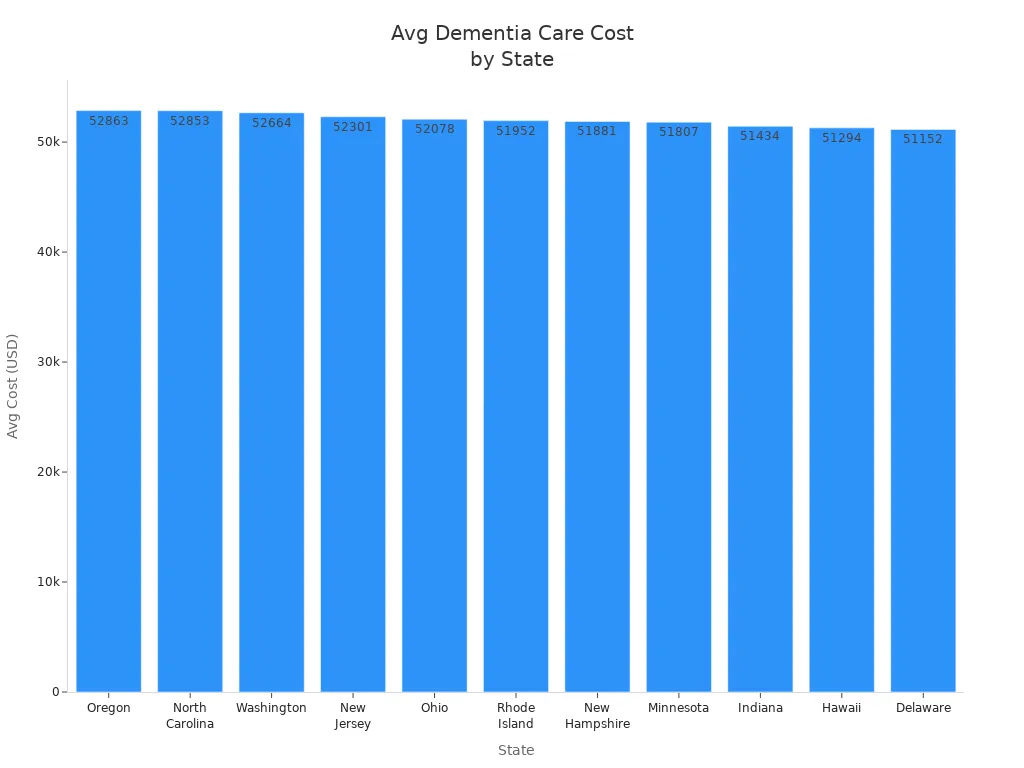
Dementia care can cost a lot. The price is different in each state and program. Here is a table with average costs in some states:
| State | Average Cost of Dementia Care | Medical Spending | Unpaid Caregiving |
|---|---|---|---|
| Oregon | $52,863 | $45,759 | $410 |
| North Carolina | $52,853 | $41,107 | $1222 |
| Washington | $52,664 | $43,480 | $705 |
| New Jersey | $52,301 | $41,786 | $745 |
| Ohio | $52,078 | $41,993 | $785 |
Ask these questions about money:
- What do you pay each month?
- Are there extra fees for special things?
- Does insurance pay for any part?
- Is there help for families who need it?
Availability
Some programs have waitlists. You should know how long you might wait. Most people wait about 381 days to get in. Ask these questions:
- Is there a waitlist?
- How long is the wait?
- Can you visit while you wait?
Activities and Daily Life
Programs have many activities to help people feel better. These can help with memory, mood, and health. Some activities are:
- Going to museums
- Using clay to help hands
- Making music instruments
- Reading together
- Playing cards and board games
- Doing puzzles
- Comedy and acting games
- Brain-training apps
- Gardening
- Swimming
- Walking in the neighborhood
- Chair exercises
- Yoga and massage
Some programs make special plans for each person. They use routines that fit each person’s life. You might see meditation and mindfulness to help with stress. Many programs also have exercise and healthy eating plans.
Make a list of questions before you go. Write down answers and compare programs. This helps you pick the best one for your family.
If you do these things, you will feel better about choosing a local dementia program.
Getting Started with Enrollment
You found a dementia program that looks right for your family. Now, you want to know how to get started. This part helps you take the next steps with confidence.
Initial Contact Steps
Reaching out to a local dementia program is easier than you might think. You can use different ways to make contact. Here are some good options:
Phone, Email, Online Inquiry
- Call the program directly. Many places have a main phone number on their website.
- Use email if you prefer writing. You can ask questions and get written answers.
- Fill out an online inquiry form. Most programs have a contact page where you can send your details.
You can also call the Alzheimer’s Association’s 24/7 Helpline at 800.272.3900. Friendly staff answer questions and guide you to local resources. The Alzheimer’s Association website lists local offices. You can find support groups and educational programs near you.
Write down the name of the person you speak with and the time you called. This helps you keep track of your search.
Scheduling Visits
After you make contact, ask about visiting the program. Many places let you tour their facility. You can see how staff interact with people. You can look at safety features and daily activities. Some programs offer virtual tours if you cannot visit in person.
- Ask for a tour date and time.
- Find out if you need to bring your loved one.
- Check if you can meet staff or join a sample activity.
Visiting helps you feel more comfortable and lets you see if the program fits your needs.
Preparing Documentation
Before you enroll, you need to gather some paperwork. Programs want to know about your loved one’s health and care needs.
Required Forms
Most programs ask for:
- Medical records or a doctor’s note
- Insurance information
- Emergency contact details
- List of medications
- Proof of diagnosis (if available)
You can ask the program for a checklist. This makes it easier to collect everything you need.
| Document Type | Purpose |
|---|---|
| Medical Records | Shows health history |
| Insurance Card | Confirms coverage |
| Medication List | Helps staff give correct care |
| Emergency Contacts | For urgent situations |
Intake Process
The intake process helps the program learn about your loved one. Staff may ask questions about daily routines, likes, and dislikes. You might fill out a form or talk with a nurse or social worker.
- Share details about your loved one’s habits and needs.
- Ask about the next steps after intake.
- Find out when care can begin.
If you feel unsure, ask for help. Staff want to make the process easy for you.
Getting started with enrollment takes a few steps, but you can do it. Stay organized, ask questions, and take notes. You will feel more confident as you move forward.
You have learned ways to find local dementia programs. You can use online directories to search for help. You can call health providers for advice. You can talk to community groups for support. Try using both online and offline tools. Ask for help when you need it.
Check with more than one program to find the best one. Families face problems like cost and finding good services. They also have to balance care with other jobs. Here is a quick summary:
| Challenge | Description |
|---|---|
| Financial burdens | Paying for care can be hard |
| Finding reliable services | It is tough to find good programs |
| Navigating legal/financial | Legal and money issues can be confusing |
| Balancing family obligations | Taking care of family and working is not easy |
| Emotional health support | Caregivers need help with feelings |
Stay organized and keep asking questions. You can do it!
FAQ
How do I know if a dementia program is right for my family?
You can visit the program, talk to staff, and ask about daily activities. Look for friendly staff and safe spaces. Trust your feelings when you walk in. If you feel comfortable, it’s a good sign.
What documents do I need to enroll in a dementia program?
Most programs ask for medical records, a list of medicines, and emergency contacts. Some may need proof of diagnosis or insurance cards. You can call ahead and ask for a checklist.
Can I get financial help for dementia care?
Yes! Some programs offer sliding scale fees or accept Medicaid. You can ask about grants or local support. The Area Agency on Aging and Alzheimer’s Association can help you find financial resources.
How long does it take to join a dementia program?
Wait times can vary. Some programs have open spots, while others have waitlists. You should ask about the wait time when you call. Sometimes, you can join a support group right away.
What if my loved one does not speak English?
Many programs offer help in different languages. You can ask if they have staff who speak your language or if they use interpreters. Some directories let you search for programs by language.
Are there programs for early-stage dementia?
Yes, many places have special groups for people with early memory loss. These programs focus on social activities and brain health. Ask about early memory loss or navigation clubs when you call.
Can I visit a program before enrolling?
Absolutely! Most programs welcome visits. You can tour the facility, meet staff, and see activities. Some even offer virtual tours. Visiting helps you decide if it’s a good fit.
Who can I call if I need help right now?
You can call the Alzheimer’s Association 24/7 Helpline at 800.272.3900. Friendly staff can answer your questions and guide you to local resources.